



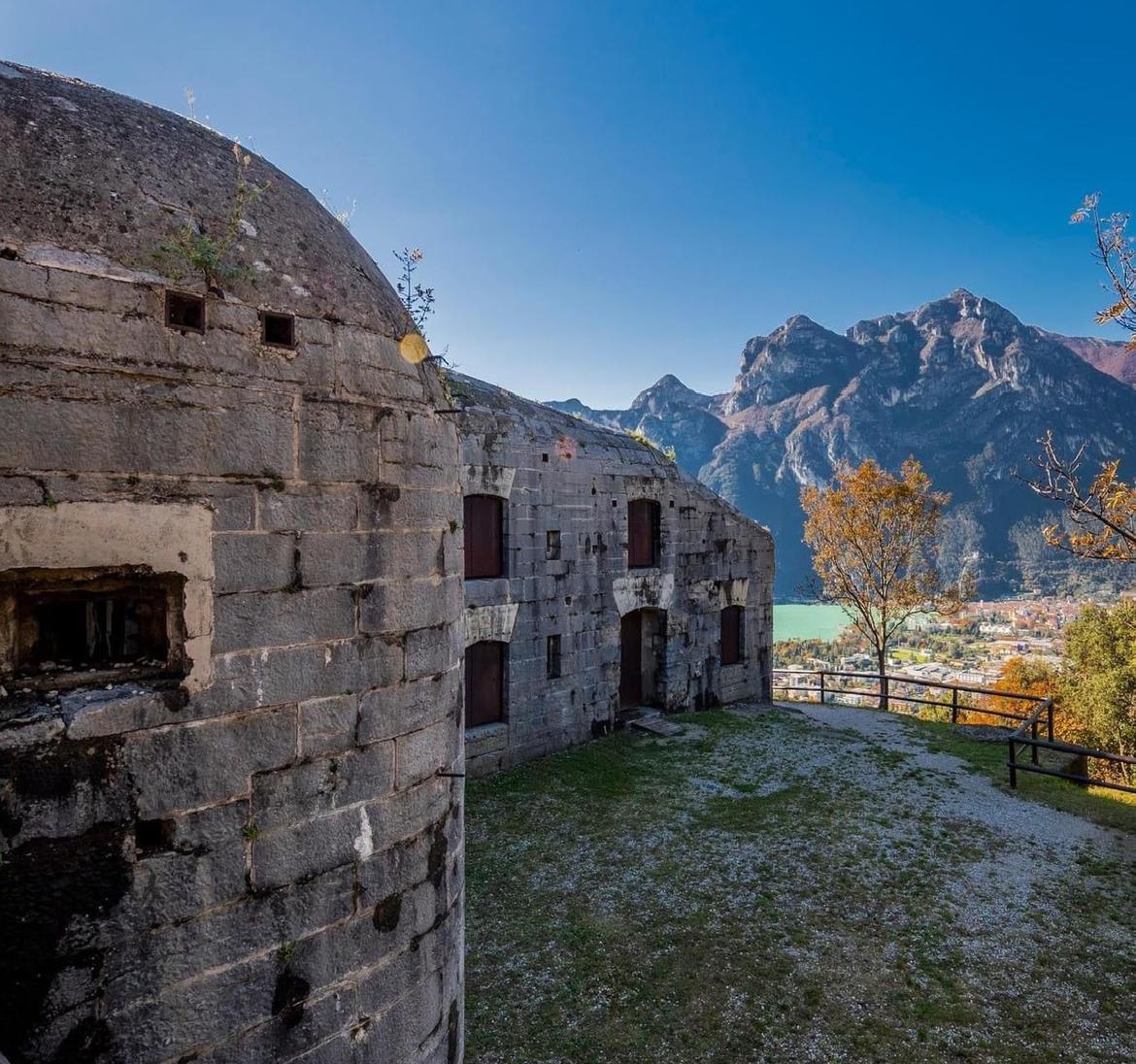
I Forti del Monte Brione: Sentinelle di Storia sul Garda Trentino
IT EN
Il Monte Brione è quel caratteristico “scoglio” verde a forma di pinna che separa Riva del Garda da Torbole. Oggi è un’oasi naturale di pace, amata da trekker e appassionati di mountain bike, ma un secolo fa era uno dei punti più strategicamente caldi d’Europa.
Se stai cercando un’escursione che unisca panorami mozzafiato sul Lago di Garda e un tuffo nella storia della Grande Guerra, il sentiero dei forti sul Monte Brione è l’itinerario perfetto.
Un’immensa fortezza di cemento e roccia
Tra il 1860 e il 1914, l’Impero Austro-Ungarico trasformò il Monte Brione in un vero e proprio “campo trincerato”. La sua posizione sopraelevata permetteva di controllare perfettamente il lago e le vie di comunicazione circostanti, all’epoca confine d’avanguardia con il Regno d’Italia.
Lungo il cammino (noto come Sentiero della Pace) si incontrano ben quattro fortificazioni principali, ognuna testimone dell’evoluzione dell’architettura militare.
Scorri fino alla fine dell’articolo per scoprire il percorso e clicca sui titoli per accedere alle schede dedicate e approfondire tutte le informazioni utili.
1. Forte San Nicolò
Situato ai piedi del monte, proprio accanto al porto turistico di Riva del Garda, è il punto di partenza ideale. Costruito a fine Ottocento e successivamente rinforzato in cemento armato, serviva a sbarrare la strada costiera e a controllare le acque del lago.
2. Forte Garda
Salendo lungo il crinale, immerso tra gli ulivi, si incontra Forte Garda. È una delle strutture più affascinanti: una “tagliata” di quarta generazione, perfettamente mimetizzata nella roccia. Recentemente restaurato, è spesso aperto al pubblico durante la stagione estiva per visite guidate.
Da non perdere: La vista che si gode dalle sue feritoie è semplicemente spettacolare.
3. Batteria di Mezzo
Situato a circa metà della salita, questo forte si sviluppa in lunghezza seguendo la linea della cresta. Era armato con imponenti obici in cupole corazzate girevoli. Le sue trincee e i camminamenti esterni sono ancora ben visibili e liberamente esplorabili.
4. Forte Sant’Alessandro
Arrivati quasi sulla sommità del Brione, si trovano i resti del Forte Sant’Alessandro. Sebbene sia il più danneggiato (fu parzialmente demolito nel dopoguerra), conserva un fascino decadente unico. Era il punto di osservazione più alto, utilizzato come stazione foto-telegrafica per comunicare con gli altri forti della zona.
🗺️ Info Utili per l’Escursione
Se hai deciso di metterti in cammino, ecco tutto quello che c’è da sapere:
-
Partenza: Porto San Nicolò (Riva del Garda).
-
Tempo di percorrenza: Circa 2 ore / 2 ore e mezza per l’anello completo.
-
Difficoltà: Facile/Turistico. Il sentiero è ripido in alcuni tratti (molti gradini nella prima parte), ma ben tracciato e sicuro.
-
Abbigliamento: Scarpe da trekking leggere o sneakers con un buon grip. Porta con te dell’acqua, poiché non ci sono punti di ristoro lungo il monte.
Il consiglio in più
Il Monte Brione è anche un Biocenosi protetta (un’area protetta dell’Unione Europea) grazie alla sua incredibile biodiversità: qui crescono oltre 20 specie diverse di orchidee selvatiche. Ti preghiamo di rispettare la flora locale e di rimanere sempre sui sentieri segnalati.
Sei pronto a partire?
I forti del Monte Brione non sono solo vecchie mura di cemento; sono pagine di storia a cielo aperto, circondate da uno dei paesaggi più belli d’Italia. Lasciati avvolgere dal silenzio della storia e dalla bellezza del Garda.
EN IT
The Forts of Mount Brione: Guardians of History on Lake Garda
Mount Brione is the distinctive, fin-shaped green rock that separates Riva del Garda from Torbole. Today, it is a peaceful natural oasis loved by hikers and mountain bikers, but a century ago, it was one of the most strategically tense hotspots in Europe.
If you are looking for a hike that combines breathtaking views of Lake Garda with a deep dive into WWI history, the fort trail on Mount Brione is the perfect itinerary.
Scroll to the end of the article to view the route, and click on the titles to open the dedicated pages and find all the useful information.
A Massive Fortress of Concrete and Rock
Between 1860 and 1914, the Austro-Hungarian Empire transformed Mount Brione into a true entrenched camp. Its elevated position allowed perfect control over the lake and the surrounding communication routes, which at the time marked the frontline border with the Kingdom of Italy.
Along the path (known as the Sentiero della Pace or Peace Trail), you will encounter four main fortifications, each witnessing the evolution of military architecture.
1. Fort San Nicolò
Located at the foot of the mountain, right next to the marina in Riva del Garda, this is the ideal starting point. Built in the late 19th century and later reinforced with reinforced concrete, it was designed to block the coastal road and control the lake waters.
2. Fort Garda
Heading up the ridge, nestled among olive trees, you will find Fort Garda. It is one of the most fascinating structures: a fourth-generation fort, perfectly camouflaged into the rock face. Recently restored, it is often open to the public during the summer season for guided tours.
Don’t miss: The view from its loop-holes is simply spectacular.
3. Batteria di Mezzo (Middle Battery)
Located about halfway up the climb, this fort stretches out along the ridgeline. It was armed with massive howitzers inside rotating armored domes. Its trenches and outdoor walkways are still visible and free to explore.
4. Fort Sant’Alessandro
Reaching almost the summit of Mount Brione, you will find the ruins of Fort Sant’Alessandro. Although it is the most damaged (partially demolished after the war), it retains a unique, decadent charm. It was the highest observation point, used as a photo-telegraph station to communicate with other forts in the area.
🗺️ Useful Hiking Info
If you have decided to hit the trail, here is everything you need to know:
-
Starting Point: Porto San Nicolò (Riva del Garda).
-
Duration: About 2 to 2.5 hours for the complete loop.
-
Difficulty: Easy/Leisurely. The trail is steep in some sections (with many steps in the first part) but well-marked and safe.
-
Gear: Light hiking shoes or sneakers with good grip. Bring water, as there are no refreshment points on the mountain.
An Extra Tip
Mount Brione is also a protected Biocenosis area (a European Union protected site) thanks to its incredible biodiversity: over 20 different species of wild orchids grow here. Please respect the local flora and always stay on the marked paths.
Ready to Go?
The forts of Mount Brione are not just old concrete walls; they are pages of history under the open sky, surrounded by one of the most beautiful landscapes in Italy. Immerse yourself in the silence of history and the beauty of Garda.